|
THE LOCATIONS
HISTORY OF EXCHANGE NATIONAL BANK BEGINS
WITH THE GULF NATIONAL BANK
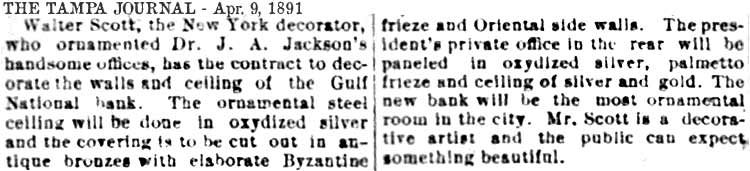
The Gulf National Bank
was certified by the U.S. Treasury Dept. on Dec. 2,
1890, and operated out of a temporary location on the
Sparkman Block (Franklin St. between Madison & Twiggs) until their new building at Franklin &
Twiggs streets was
completed in April 1891.
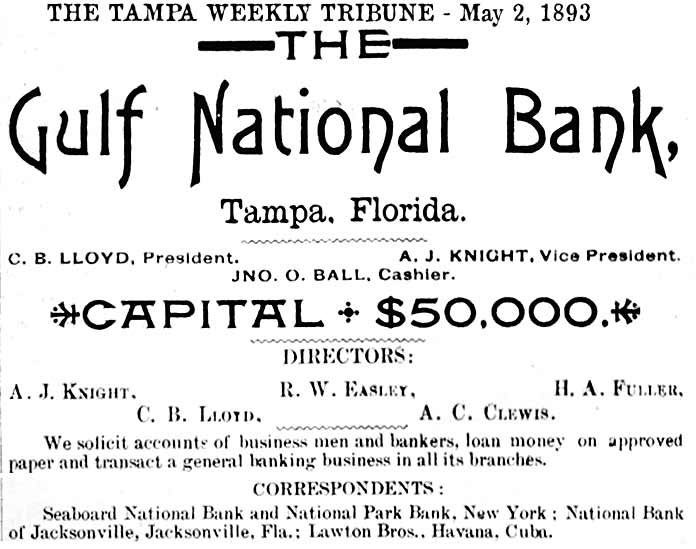
In June 1893 the
Gulf National Bank ceased operating while under the
leadership of the directors seen in the above ad.
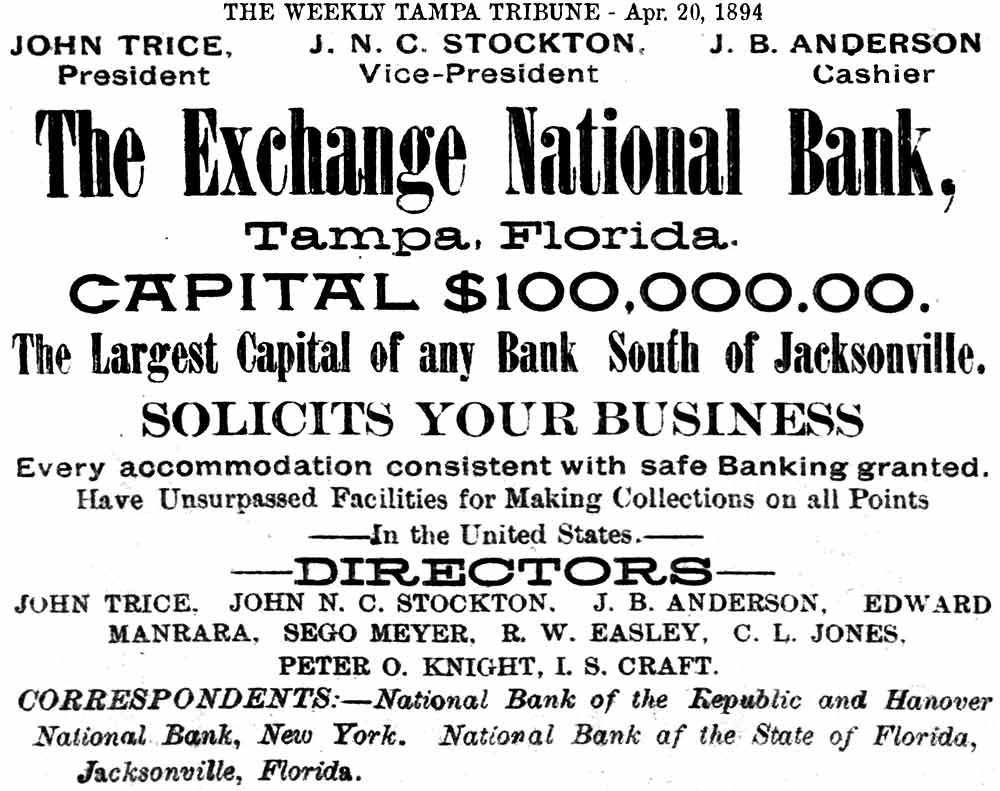
EXCHANGE NATIONAL BANK ORGANIZED
The Exchange National Bank of Tampa
was organized in March 1894 with J.N.C. Stockton of
Jacksonville as president and John Trice of Okolona,
Miss., as vice president, James B. Anderson as cashier,
and a board of directors consisting of Edward Manrara,
John Trice, John N.C. Stockton, James B. Anderson, Sego
Myers, Peter O. Knight, Robert W. Easley, Isaac S.
Craft, and Charles F. Jones.
EXCHANGE NATIONAL
BANK IN FORMER GULF BANK BUILDING
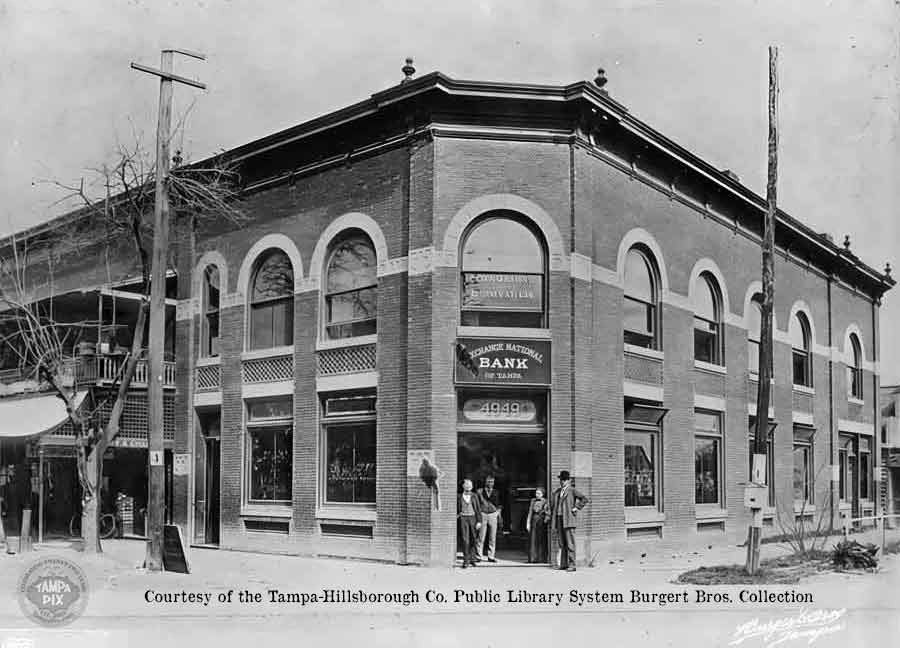
Exchange National Bank
of Tampa
opened for business on Apr. 9, 1894 in
the building formerly occupied by Gulf
National Bank at the northeast corner of
Franklin St. and Twiggs St.
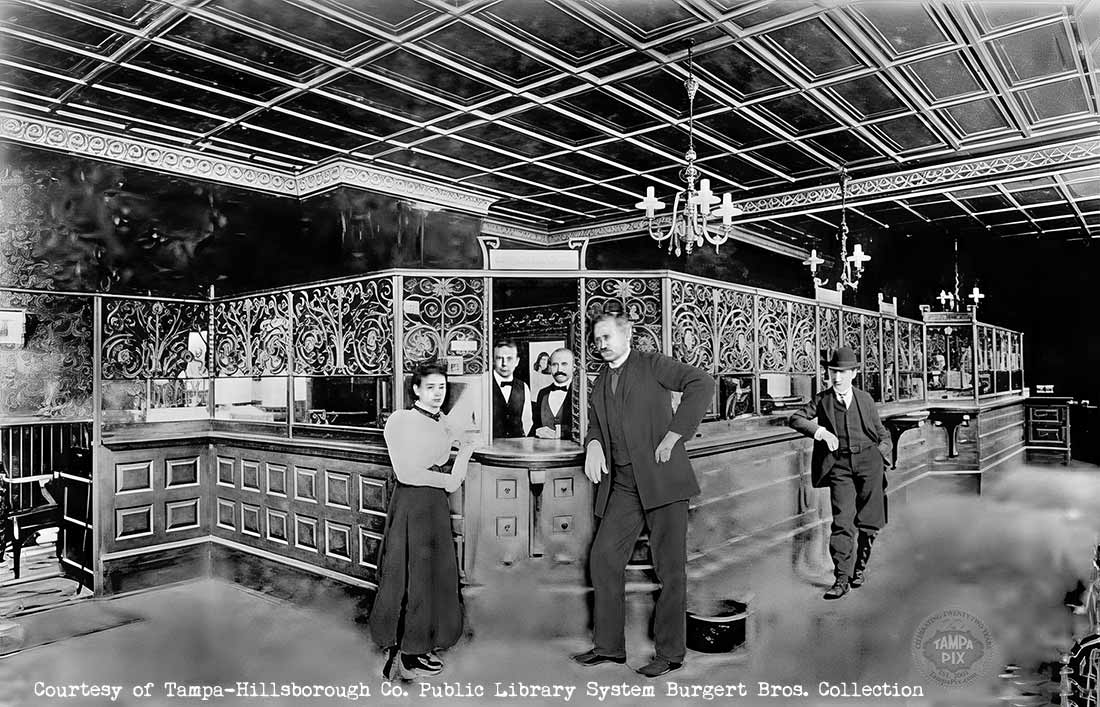
The Exchange National Bank of Tampa
tellers station in 1894 |
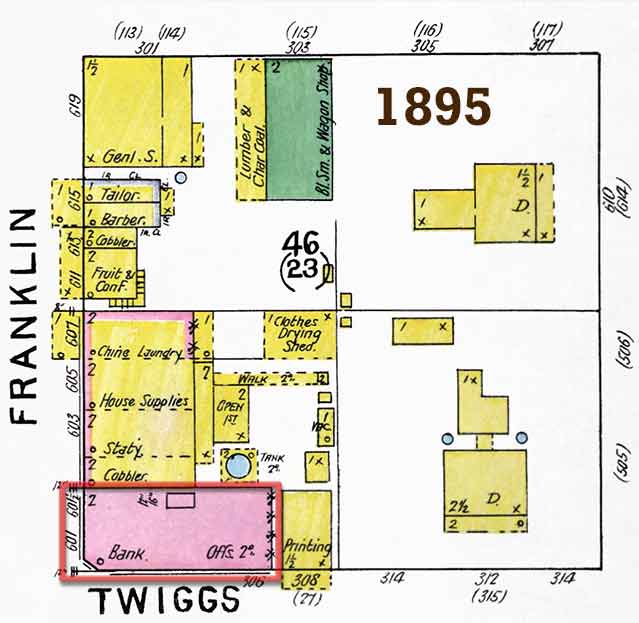
| EXCHANGE BANK LOCATION
1895 As seen in the first
photo, the bank ran a shorter distance along Franklin
St. than it did along Twiggs St. The wood
frame building with brick facade on the north side of
the bank seen at the left side of the photo consisted of
small businesses.
|
 |
EXCHANGE
BANK PLANS A MODERN TEN-STORY SKYSCRAPER
For
almost a year starting in 1921 the
newspapers buzzed with articles about
Exchange Bank's plans to build a 10-story
building with the bank on the lower floors and
offices for rent on the uppers. Numerous
articles described how it would be
Tampa's tallest and most beautiful brick
building to cost $750.000. It was to be
built on the same site as the old brick one
at Franklin & Twiggs once it was demolished.
.jpg)
SKYSCRAPER
PLANS SCRAPPED FOR A TWO-STORY BUILDING
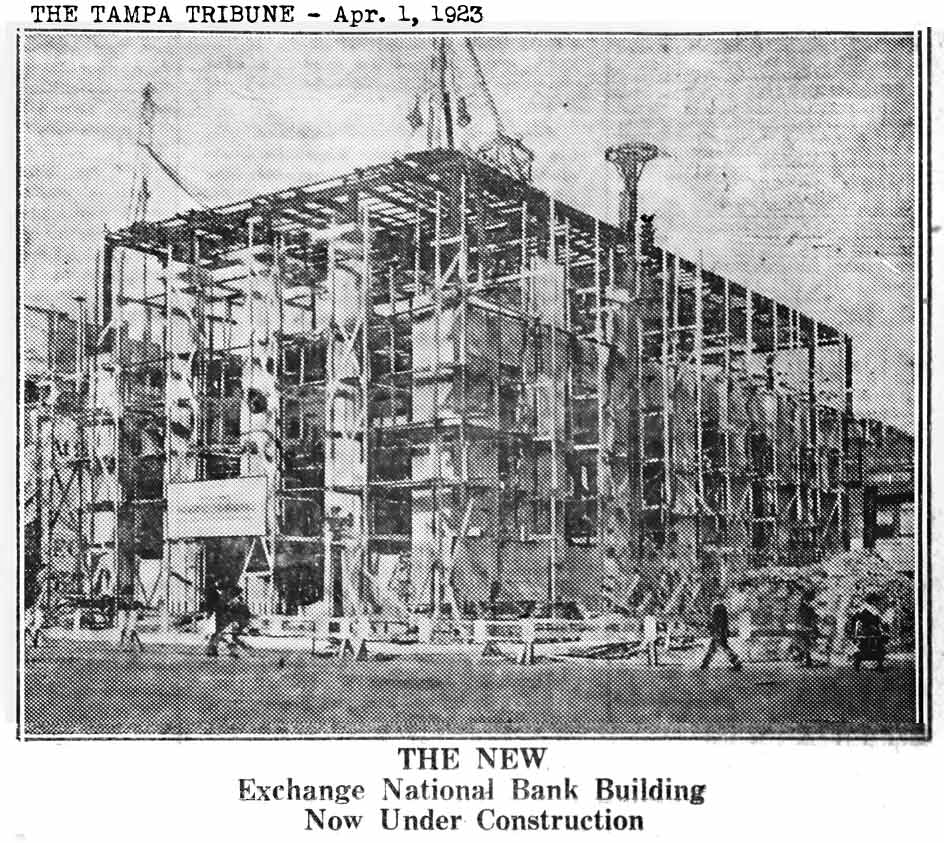
Delays before and during demolition and
construction (which included a lawsuit and a
stubborn mule, separately) set the new construction later.
The legal case involved a tenant who had a
lease with the building owner of the
property on the north side of the bank.
His claim was that he had a letter from the
owner stating that his lease would be
extended. This held up in court and
delayed the bank's plans to build the 10-story, $750k building for four
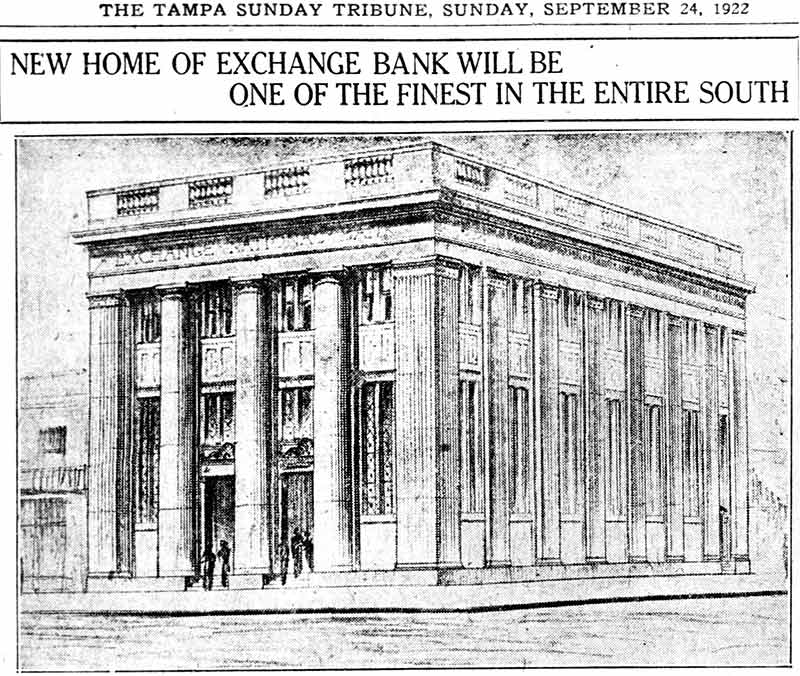
months until deals were worked out. it was not until Sept of 1922 that the
bank directors released this design which
eliminated the upper floor offices and
provided space only for the bank. It
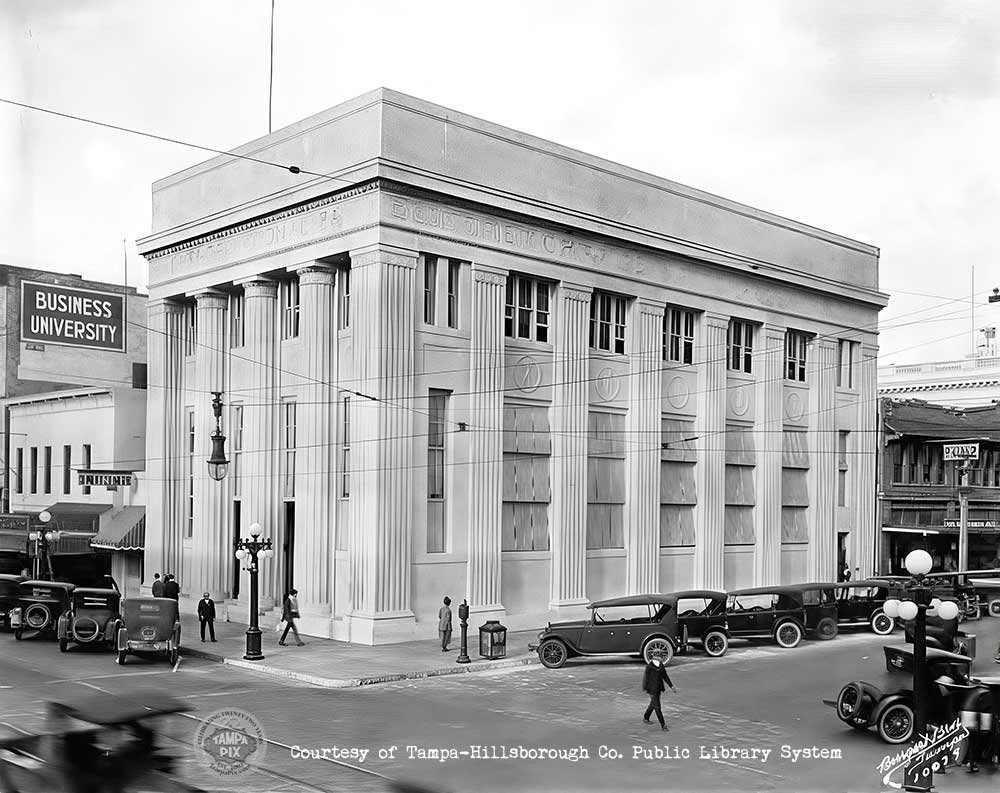
was to be a
$250,000 two-story Greek-style limestone
structure designed and built by Stone &
Webster.
Nov. 22, 1923
|
EXCHANGE BANK
PLANS A SIX-STORY ADDITION
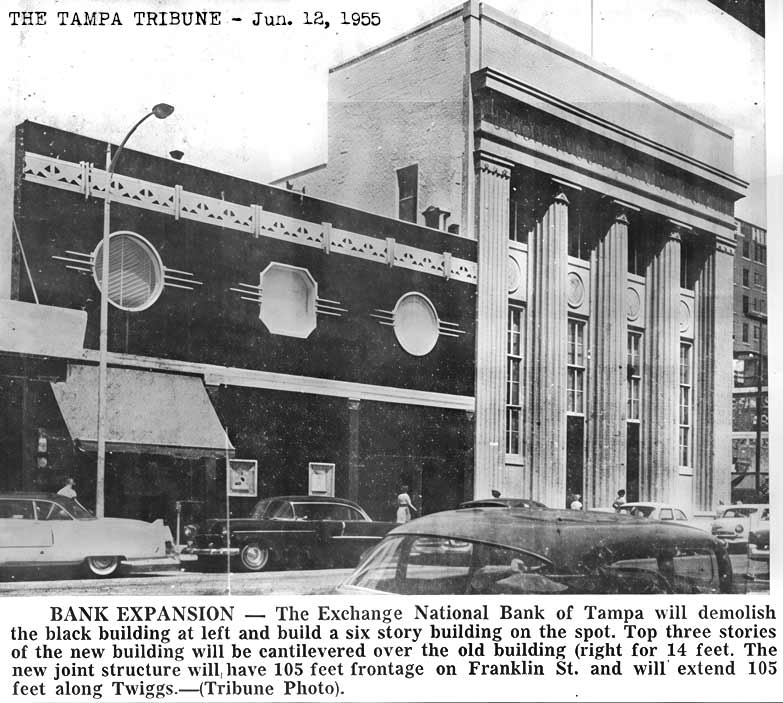
On June 12, 1955,
Exchange Bank announced plans to build a $1M six-story
expansion on the north side of the current 1923 building.
Demolition of the building where the expansion would
be built began on June 20, 1955. Biting the
dust in this old building was the home of Ferrell
Jewelry Co. and the bank's trust and personal loan
departments. "A modernistic new bank building
will rise on the spot and is to be completed in a
year."
The present 2-story
bank building (3-story if you count the height of
the first floor as 2 stories) would be combined with
the new structure in an unusual way. Common
walls would be torn out to make a single ground
floor. A balcony would be built on the 2nd
floor of the new addition from which observers could
look out over the huge main room of the old
structure. Bookkeeping and internal working
departments would be combined in a common third
floor. The top three stories of the new
building would be cantilevered over the old building
for 14 feet.
With the expansion,
the bank would occupy the entire 105 ft by 105 ft.
quarter block at the corner of Twiggs & Franklin
streets. The entrance of the old bank was to be
modernized and the new building is of modern design,
faced on the ground floor with dark granite and with
light brick on the higher levels to match the
limestone of the old building. Trim was to be
aluminum. Plans were to rent the top 3 floors
of the new addition to "professional men."
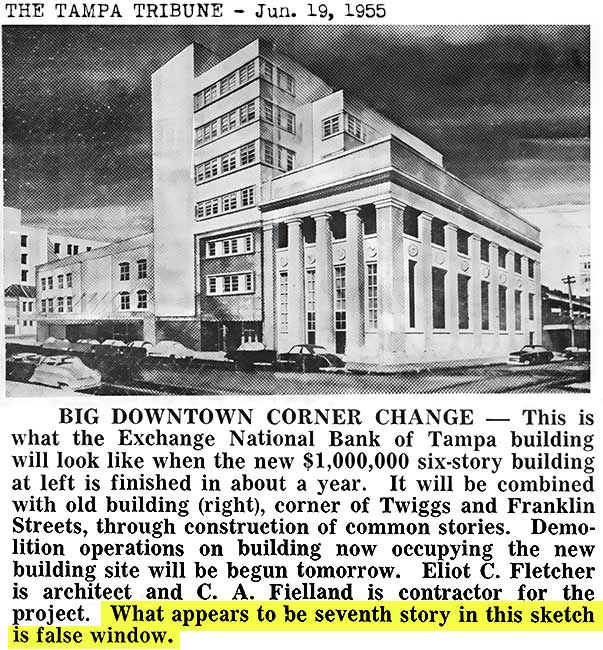
The new building was
designed by architect Elliott Fletcher and the building
contractor was C. A. Fielland. Notice that the building
sketch appears to have seven floors but the top floor was
planned as a
facade with false windows.
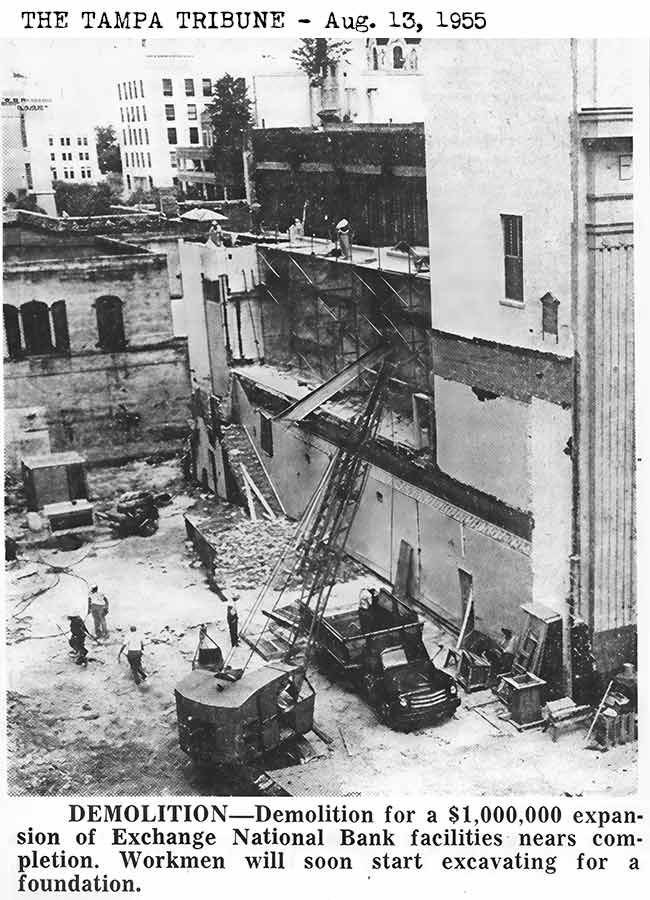
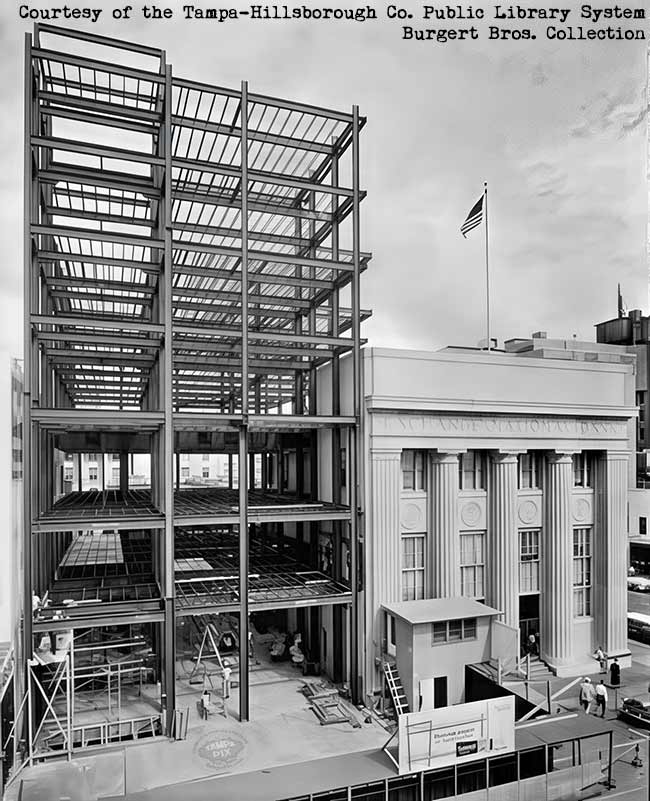
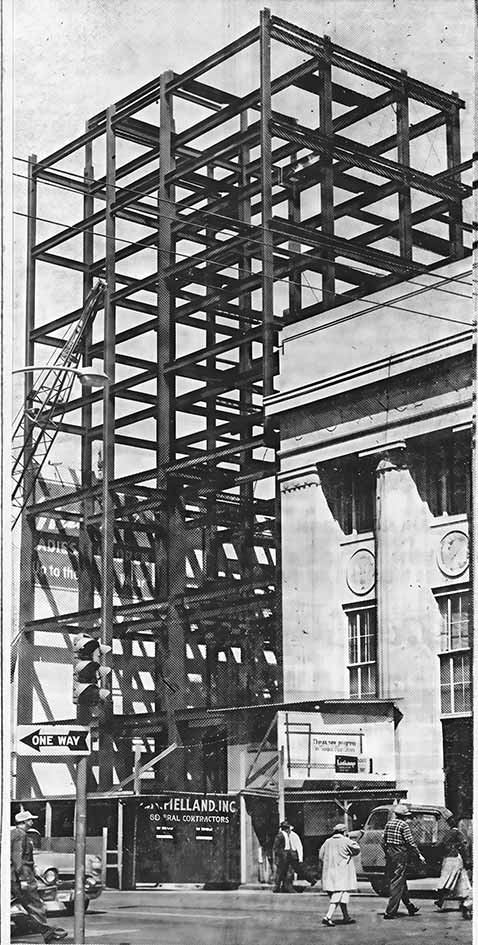
CONSTRUCTION BEGINS
Demolition of the Ferrell
Jewelry building on the north side of the 1923
building was completed in mid-August 1955.
The photo of the steel framing was taken March 16,
1956.
|
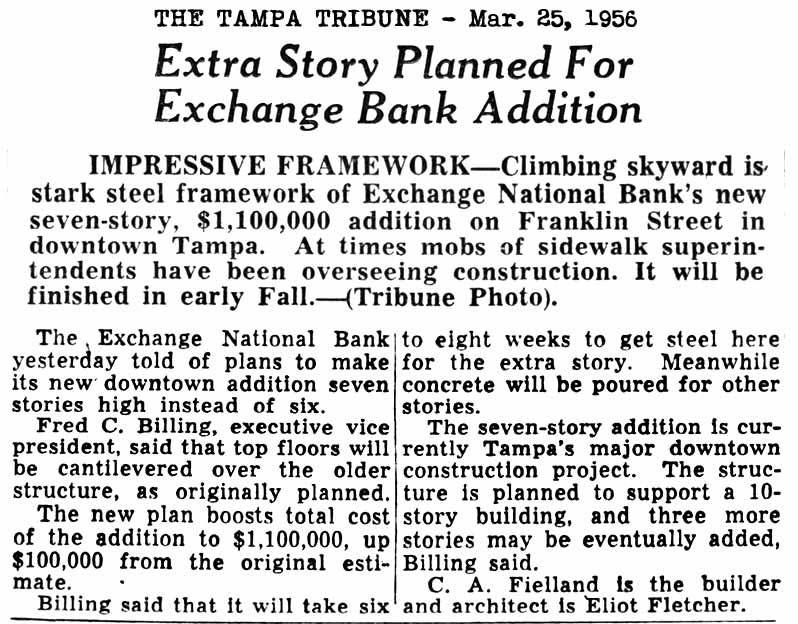
SEVENTH FLOOR PLANNED
Bank officials soon
announced that they had decided to build a 7th floor instead of a
facade with false windows. "The structure is planned to support
a 10-story building and three more stories may eventually be added."
(That never happened.)
 |
 |
| |
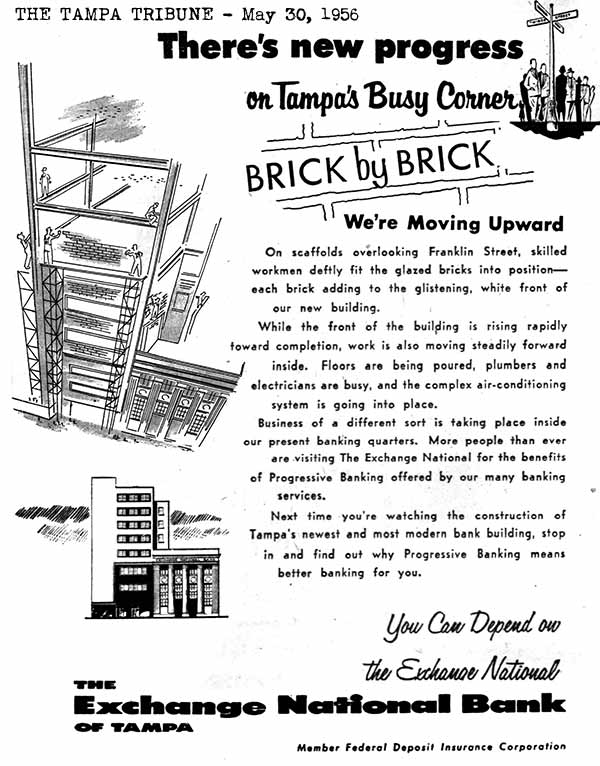
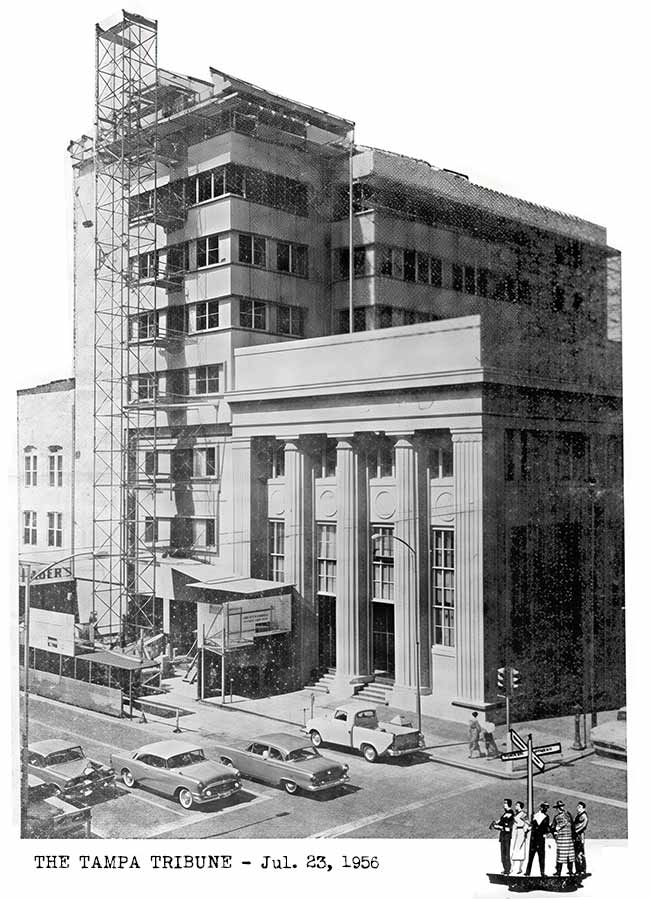
By the end of May 1956 work had
begun on adding the glazed brick facing, pouring floors,
plumbing, electrical, and air conditioning.
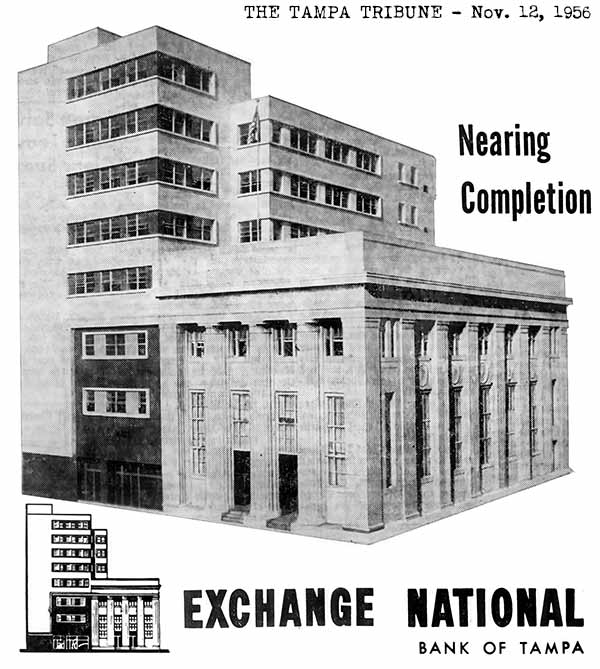
By mid-November 1956
the 7-story addition was nearly
completed. Construction crews had
removed the tunnel walkway on Franklin
St. which was necessary for safety of
pedestrians. Nearby businesses
such as Haber's, Hardy's and National
Shirt Shops breathed a sigh of relief as
the intersection of Franklin and Twiggs
streets was reopened. No article was found announcing the addition's
completion, but it can be assumed it was completed by the end of
Nov. 1956 due to businesses moving in starting on Dec. 1.
In mid-January 1957, the last department of the bank moved in
from its temporary location at 509 Morgan St.
|
|
NEW EXCHANGE
BANK TOWER PLANNED
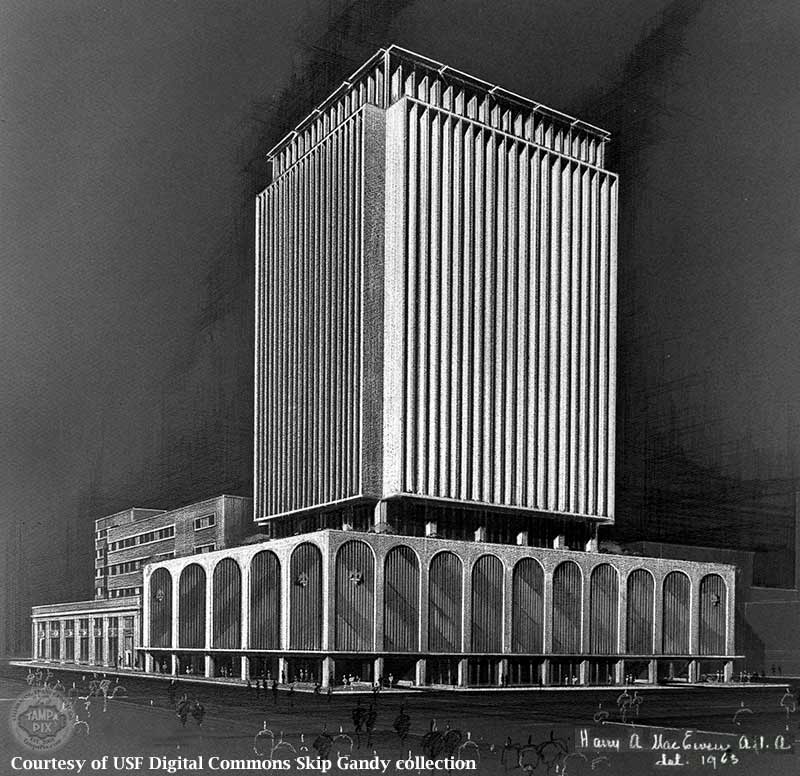
Architect: Harry A. MacEwen of Tampa, Contractor J.A. Jones
Construction Co. of Charlotte, NC.
Preliminary architect Harry A.
MacEwen's sketch, 1963.
|
|
In
the model below can be seen the oldest building, built in 1923
replacing an old brick building.
Above it to the right is the 7-story addition, completed in 1956.
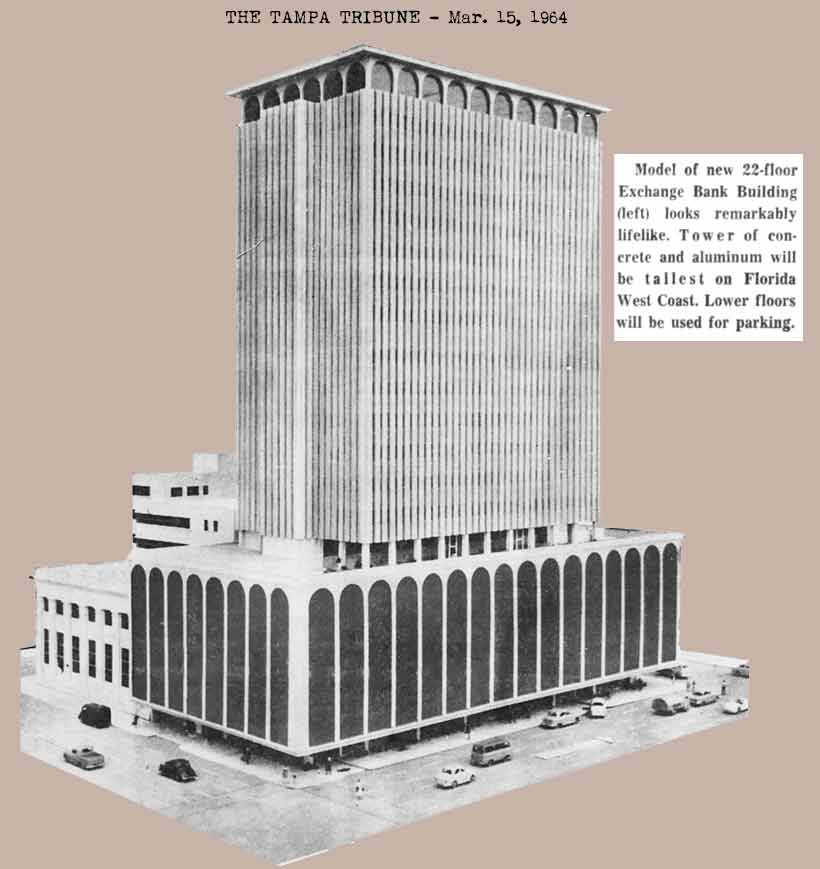
Read the whole article for details about the building.
|
|
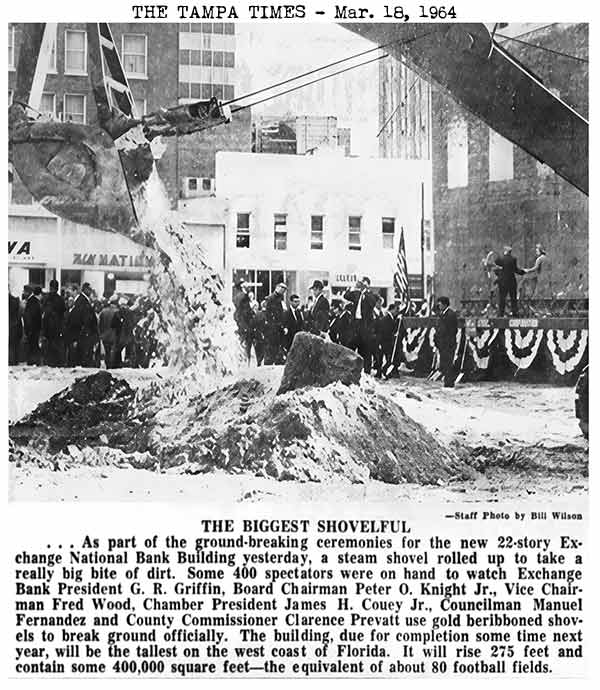
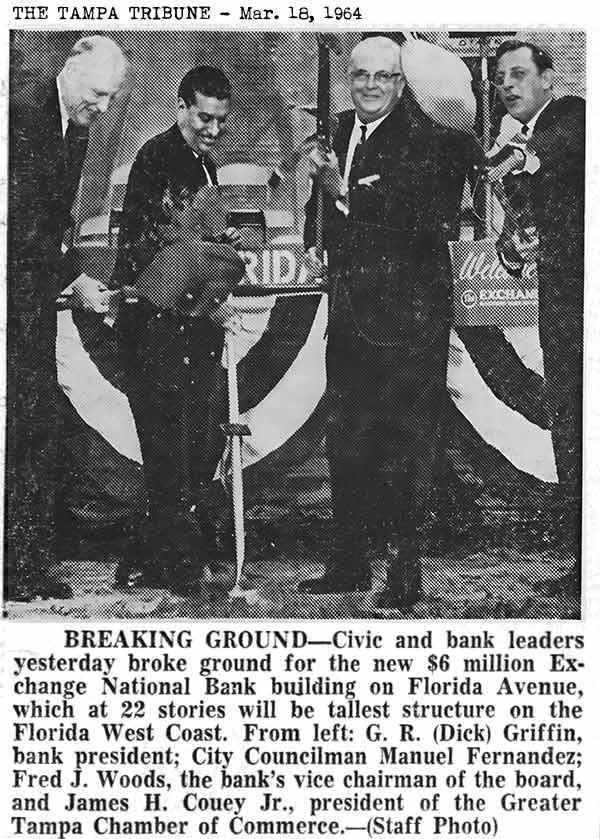
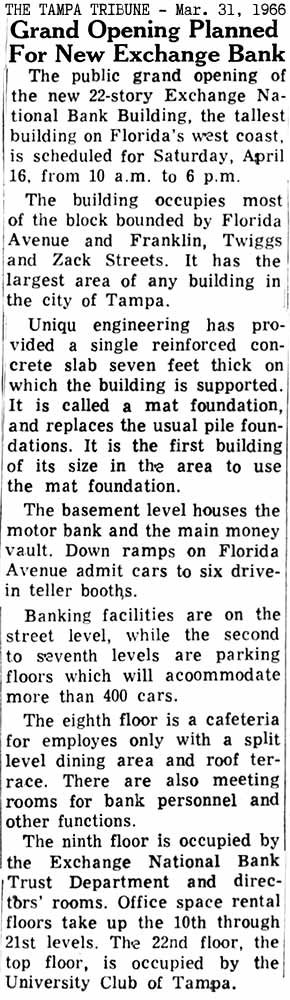
Construction on the new tower began with
groundbreaking ceremony on Mar. 17, 1964.
The new 22-story tower was built on the Florida
Avenue side of the two existing Exchange Bank
Buildings on Franklin St., all between Zack &
Twiggs St. The new tower was built with an
interior connection to the 7-story
building, but due to the differences in floor
heights, a short flight of stairs was needed to
go from one to the other.
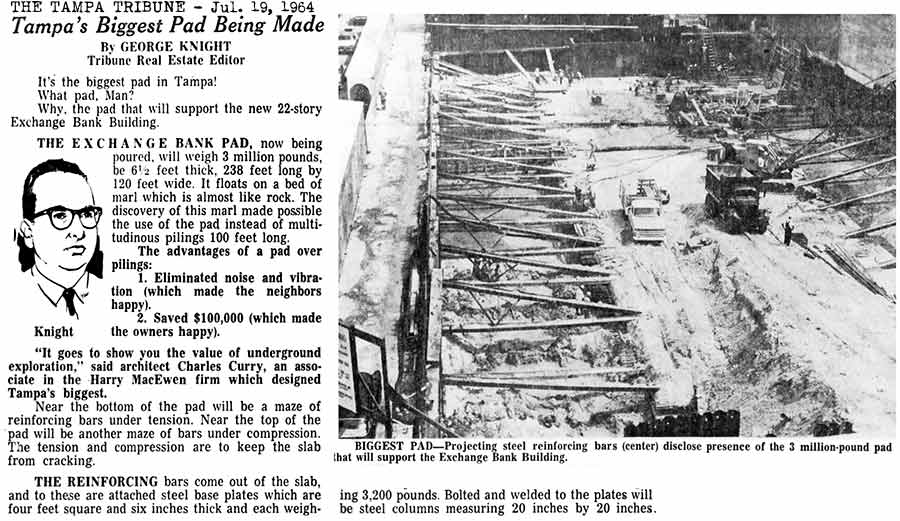
After demolition of the old buildings on the block,
construction on the foundation began in July 1964.
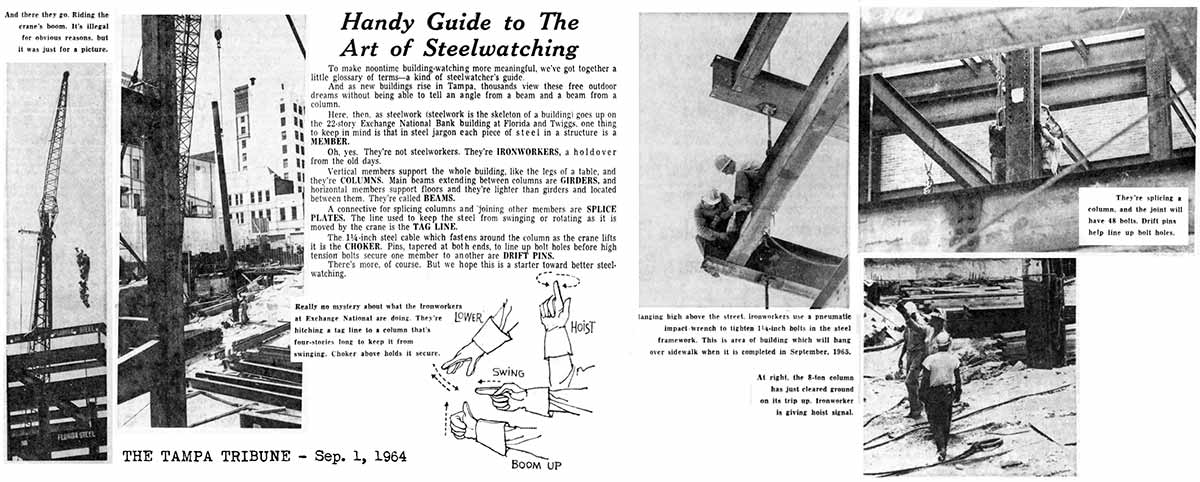
By September 1964 steelwork had begun.
SEE LARGER
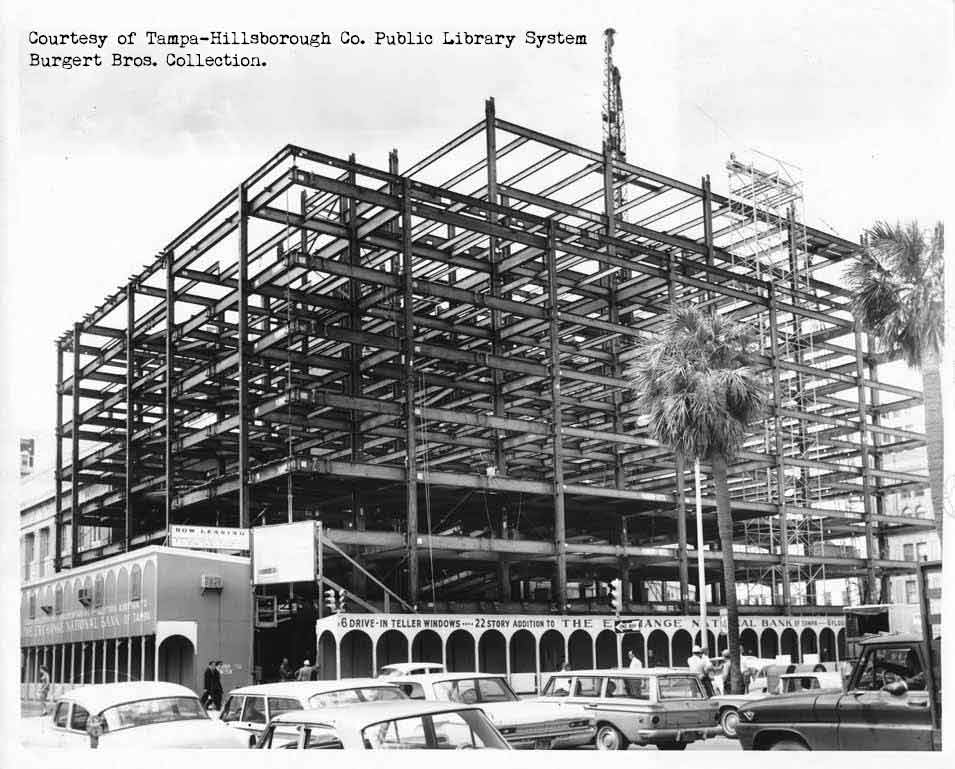
October 14, 1964 - Main steel framing of the parking
garage floors completed.
This view was taken from across Florida Ave. at Twiggs St. Notice
the air-conditioned construction offices at left.
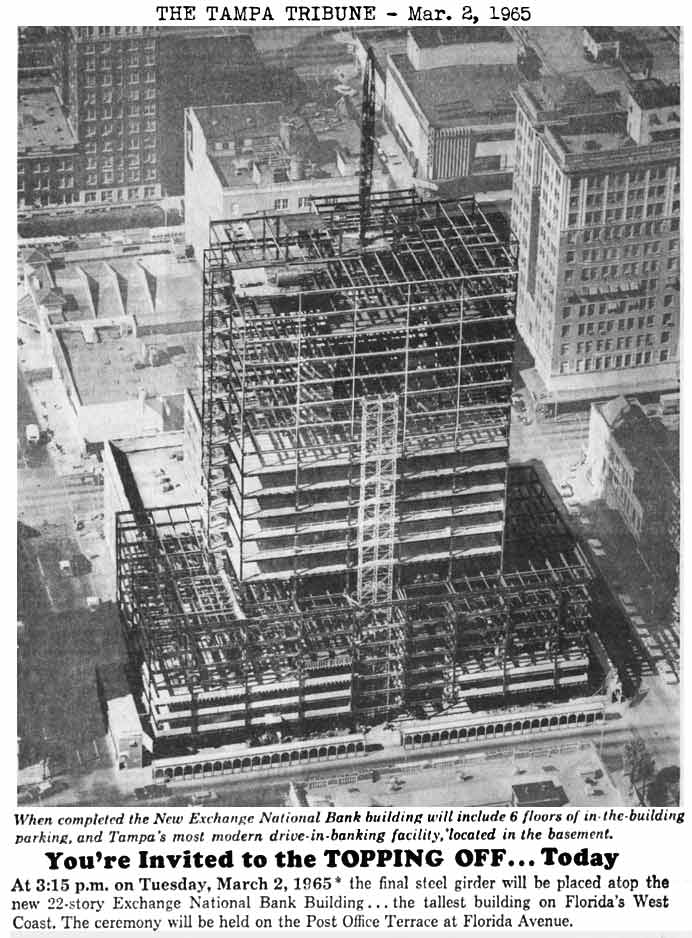
The steelwork was topped off on March 3, 1965 with a
ceremony held on the terrace of the Post Office across Florida
Avenue.
The Post Office was located in the basement of the Federal Court
building, which now operates as a hotel. At upper right is the
Citizens Bank building.

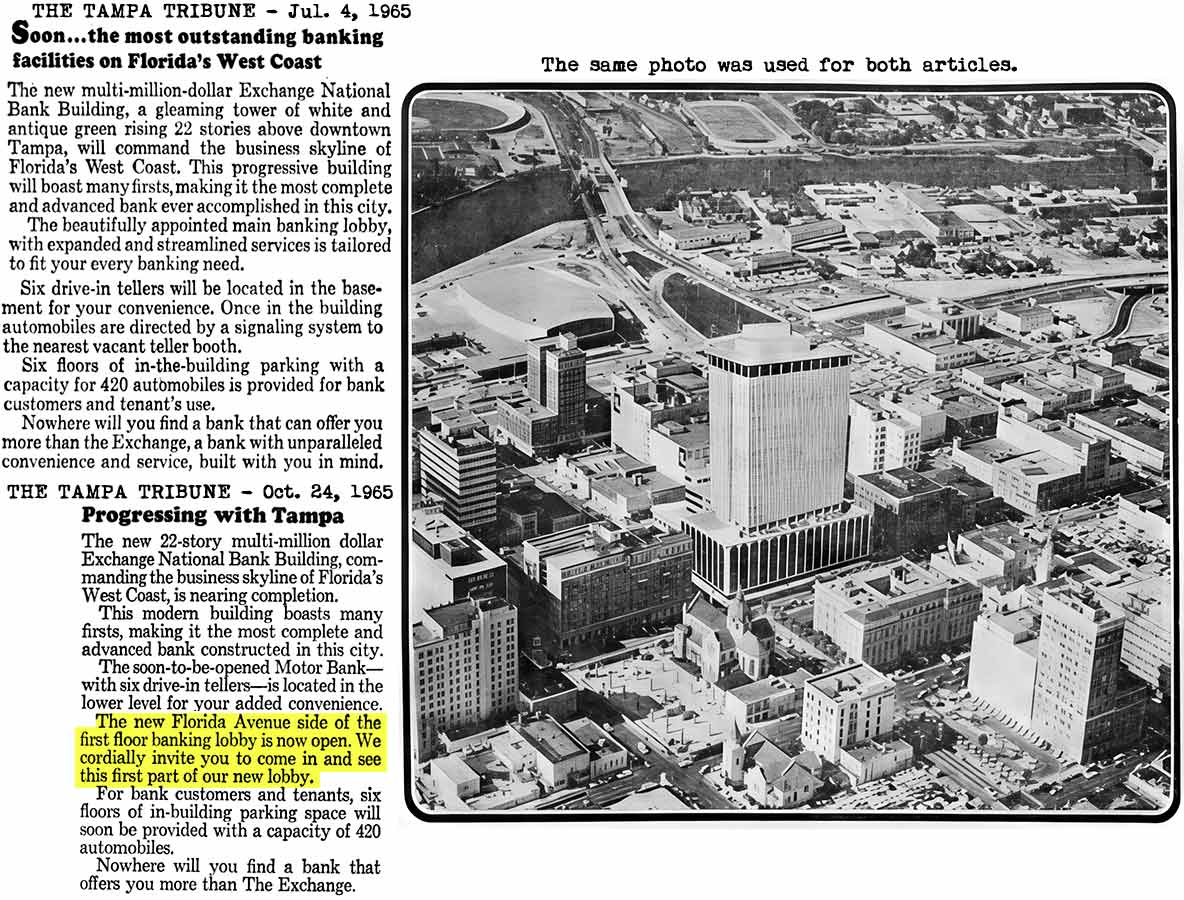
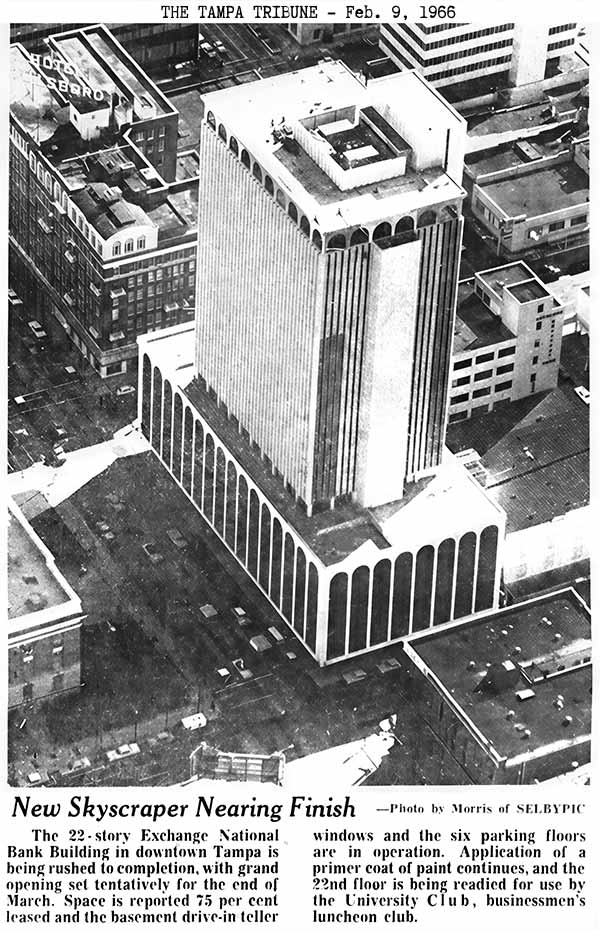
The new
tower featured 6 floors of garage parking
with a capacity of 420 cars for customers
and tenant use. (The first two parking
floors were reserved for customers.)
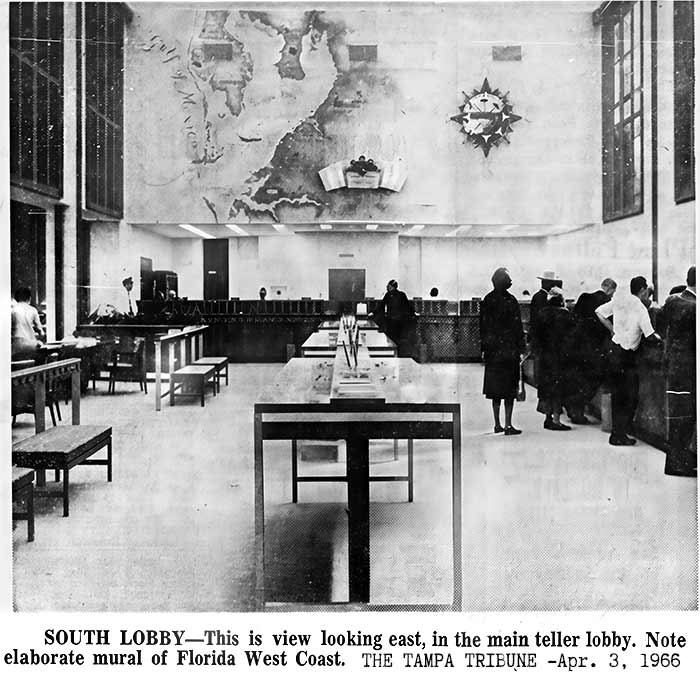
By late Oct. 1965, the Florida Ave. side
lobby was open for business.
|
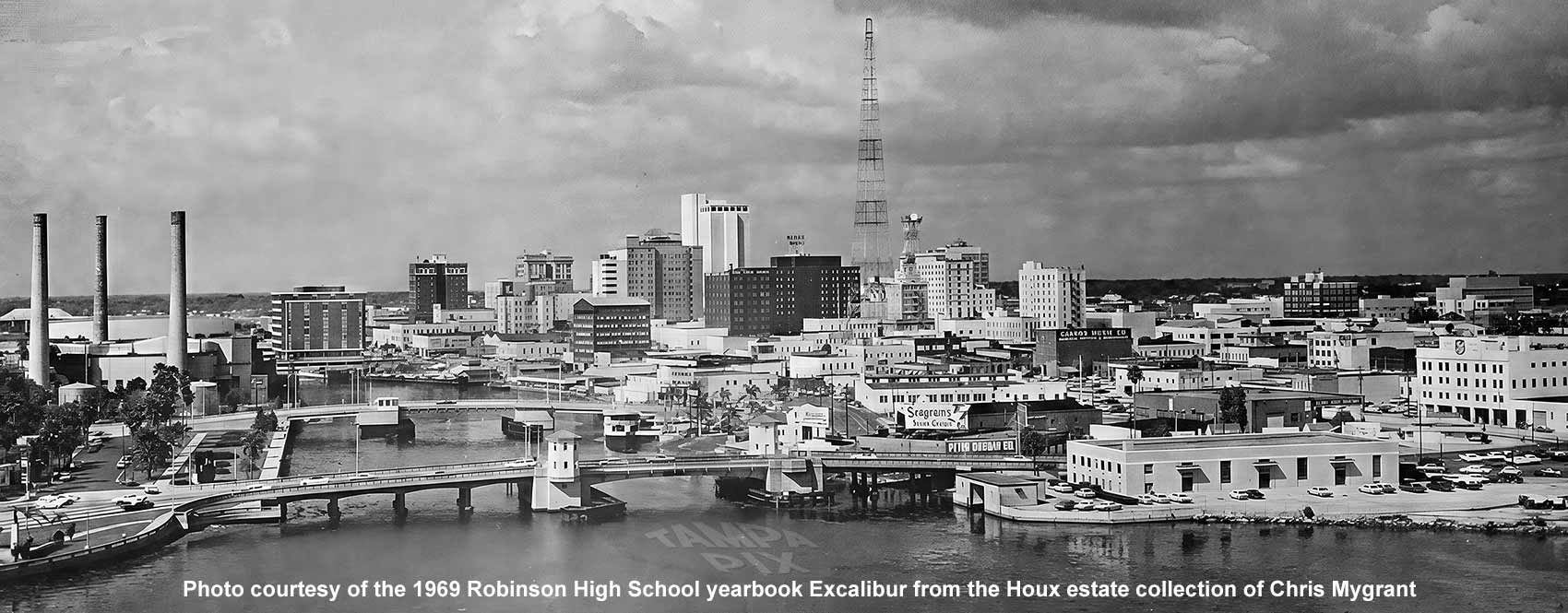
1969 VIEW OF DOWNTOWN TAMPA SKYLINE
Mouse-over the photo to see major buildings identified.
|
 |
 |
| |
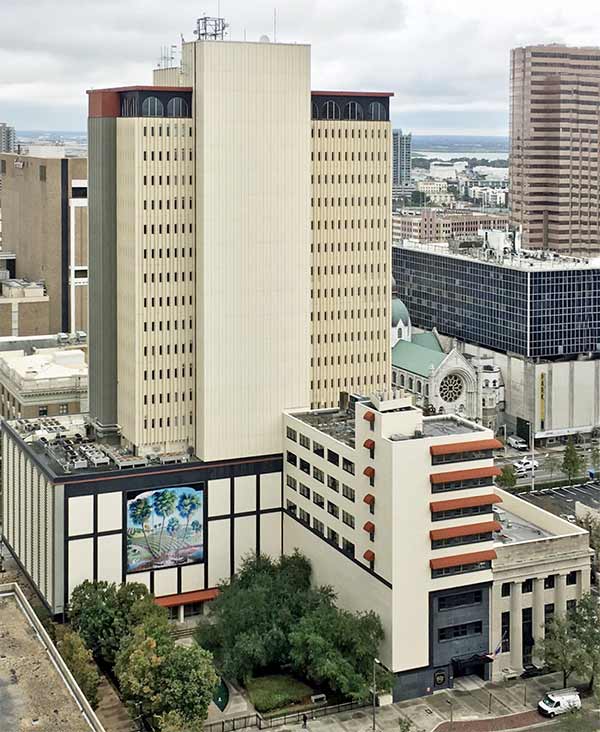
Today, the two older buildings are dwarfed by the
22-story tower. Photo from 2020 at
Wikipedia.
|
Tampapix Home
|